The Real Math Behind Reroofing a Steep Multi Valley Roof
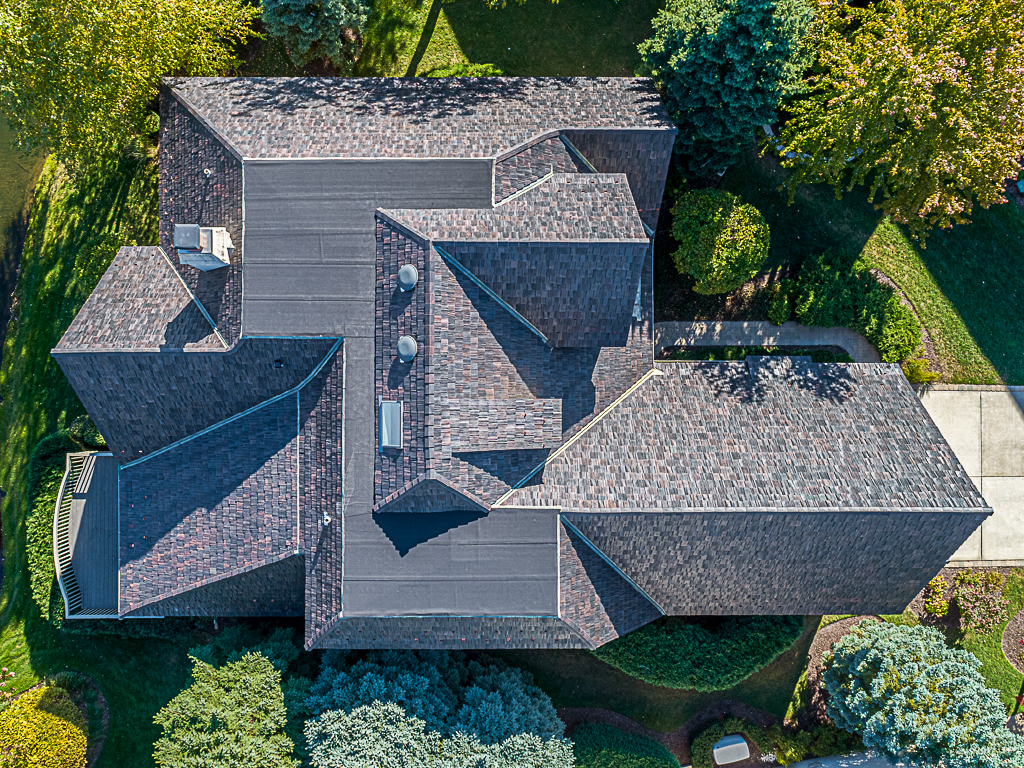
Last winter a homeowner north of Charlevoix called us after the third brown stain bloomed across his cathedral ceiling in two years. His roof was barely nine years old, but it was steep and cut up with four dormers and two valleys that collided over the great room. He wanted a simple patch. What he really needed was one of the roofing contractors charlevoix mi who read a complex roof as a system, not a surface. Those stains were never a shingle problem at their root. They traced back to how the roof was shaped and how little it breathed, with a softening deck underneath making everything worse.
Complex Rooflines Cost More For A Reason
Price per square is where most homeowners start, and on a steep multi valley roof that is the wrong place to start. A simple gable roof is basically two rectangles you measure and multiply. Add pitch and a tangle of dormers and valleys, and the waste and labor climb faster than the footprint suggests. A Roofing Contractor homeowners survey found nearly 69 percent of homeowners still run standard asphalt shingles and 74 percent find their roofer through word of mouth. So the typical bid gets written for the typical roof, and yours is not that roof. What matters is not the shingle price, it is what the shape does to every other line on the estimate.
Valleys And Dormers Multiply The Labor
Every valley is a seam where two roof planes drain into a single line. Every dormer is a little building with its own walls and flashing to seal. On the Charlevoix home behind this piece, four dormers and two valleys turned a roof you could describe in one breath into a dozen separate cutting operations. Staffing that work keeps getting harder. Roofing Contractor counted roughly 259,000 construction job openings at the end of April 2026, up about 25 percent from a year earlier. The crews who can cut a clean valley book out first. Labor, not material, is what a roof this complicated really sells.
Ventilation Math Most Quotes Skip
A roof breathes like a wood stove. Choke the intake at the eaves and the ridge exhaust does almost nothing, the way a closed damper leaves a stove smoldering however wide the flue. Code wants intake and exhaust balanced. On a cut-up roof the usable soffit and ridge runs are shorter than the raw square footage implies. The case we see most often is a ridge vent set over soffit baffles crushed flat by insulation, so warm, moist air just sits and condenses on the deck. Getting that ratio right is what separates the roofing contractors charlevoix mi homeowners actually want from a crew that only nails shingles down.
Where Ice Dams Add Hidden Cost
Ice dams form when attic heat melts snow up high, and the runoff refreezes at the cold eaves until the backed-up water finds a seam. Where dormer roofs flatten or a porch ties in low, a complex roof often carries a rubber membrane instead of shingles, and that membrane lives or dies on staying flexible. A peer-reviewed study in Polymers found EPDM’s elongation at break dropped to 46.6 percent of its original value after 672 hours of aging at 100 C, while its stiffness rose 112 percent. A membrane that stiff cracks when shifting ice shoves against it instead of flexing. So the ice dam becomes a flashing and membrane repair at every low transition, not just a shingle nuisance up top. Those are the repairs a cut-rate bid quietly leaves out.
Cheap Bids Skip The Deck Repair
Tear the old roof off a house this age and you almost always find the story the shingles were hiding. Around the valleys and dormer bases, where water concentrated for years, the plywood decking often comes up soft and spongy underfoot. That decking was on borrowed time, and laying fresh shingles over it just buys a few seasons before the fasteners lose their grip. A low bid stays low by assuming every sheet of that deck is perfect and reusable, which it rarely is. When the crew opens the roof and finds rot, the change order lands and the cheap quote stops being cheap. Pricing likely deck repair up front, even as a rough range, is the honest move.
Budget For The Whole System Not The Shingles
Put real numbers on the Charlevoix home to see how the pieces stack up. The footprint is about 2,000 square feet, but a 10/12 pitch carries a slope factor near 1.30, so the actual roof surface runs closer to 2,600 square feet. Four dormers and two valleys push the waste factor to roughly 15 percent, which rounds the job to about 3,000 square feet, or 30 squares. Say an architectural shingle system runs $650 a square on a straightforward roof. Honestly, on a roof this cut up, figure closer to $780 a square once the valley cuts and dormer flashing eat the hours. That comes to about $23,400 for the field alone, before a dime of balanced ventilation or a single sheet of deck repair.
That whole-system number is the one worth comparing, not the price per square three contractors scribble on the back of a card. A steep multi valley roof is a shape-and-airflow problem sitting on a deck, long before it is a shingle purchase. The quote that names all of that is usually the one that holds up over a Charlevoix winter. Ask for the roof as a system, and the real math stops being a surprise halfway through the tear-off.