Running the Real Math on a Full Roof Replacement Before You Hire
What should a full roof replacement actually cost before anyone signs anything? Most homeowners comparing roofing companies Montgomery TX crews recommend start with no baseline at all, so every bid feels arbitrary and maybe padded. The honest answer is that there is no single number to memorize. A fair price is one you can rebuild from its parts, material, labor, tear-off, and the small line items nobody mentions until the invoice lands on the kitchen table. Judge the breakdown, not the bottom line, and a padded quote stops hiding.
Material Choice Drives Most of the Total
Material is where the biggest share of the money goes. On a typical 2,400 square foot Montgomery home, the shingle or metal you pick can swing the total by more than the entire labor bill. A basic three-tab asphalt roof sits near the bottom of the range, around eight thousand dollars installed. Standing-seam metal or a premium composite can push the same house past eighteen thousand. A Moneywise breakdown that Yahoo Finance ran in June 2026 pegged full replacements anywhere from $5,000 to more than $30,000 nationally, which is why a lone quote tells you so little. Material also decides what you pay for decades, not just on install day.
There is a performance angle too, and it lands on the monthly energy bill. The US EPA notes that a reflective, cool roof can cut a building’s peak cooling demand by 11 to 27 percent, a real number through a Texas August. When two materials cost about the same installed, the one that eases the air conditioner is worth the small premium. A roofer worth hiring will walk you through that tradeoff instead of quoting a color and a price.
Labor and Tear-Off Are the Hidden Half
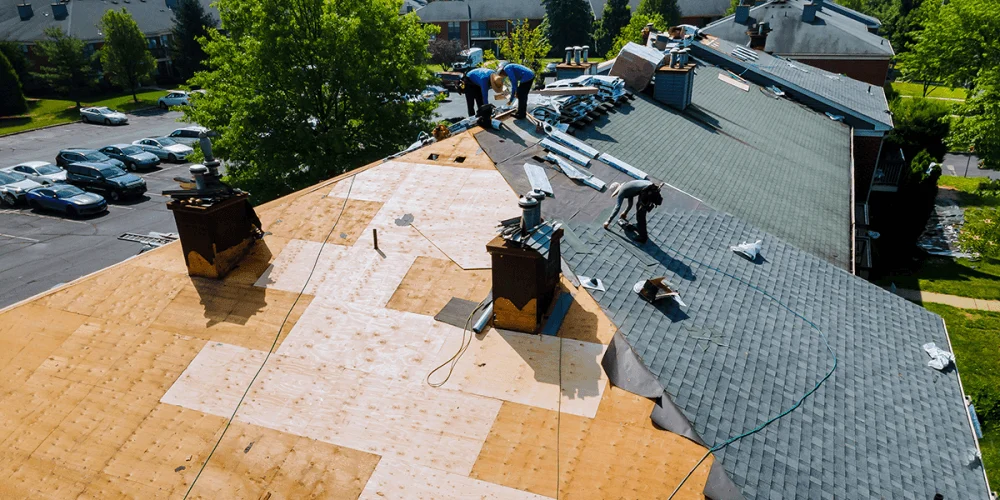
Labor and tear-off are the part of the quote most people skim past. Two roofs of the same size can differ by thousands once you count how many old layers have to come off and how steep the pitch climbs. The case we see most often is a homeowner blindsided when removing a second shingle layer added real cost, because the cheerful first quote quietly assumed there was only one.
Here is the math nobody hands you up front. Take that same 2,400 square foot house, which works out to roughly 26 roofing squares once you add waste. At about $4.50 per square foot installed for architectural shingles, material and labor run near $10,800. Add $1,400 to tear off and haul two old layers. Toss in $600 to replace decking on soft spots and $500 for the permit and dumpster, and it comes to $13,300 all in. Change one input, say a second story or a steeper pitch, and labor climbs from there fast.
This is why the better roofing companies Montgomery TX homeowners call will itemize tear-off as its own line. If a bid folds tear-off, decking, and disposal into one vague number, ask for the split before you compare it to anything else on the table. When a roofer resists breaking it out, that reluctance is its own answer.
The Right Questions Expose a Padded Quote
You do not need to be a roofer to catch padding. What you need is a short list of questions and the nerve to ask them. How much of any quote is pure margin versus real cost, honestly, nobody outside that contractor’s back office can say for certain. A roofer who claims an exact figure is guessing too. Put the following in front of every bidder, then compare the answers side by side.
- What is your price per square, and what waste factor did you assume? A good answer names a number, usually somewhere around 10 to 15 percent.
- How many old layers come off, and is tear-off a separate line? A straight answer itemizes it rather than burying it in the total.
- What decking or flashing replacement is included, and what happens if you find rot underneath? Look for a stated per-sheet price, not an open-ended promise.
- What does the labor warranty actually cover, and for how many years? Vague answers here tend to get expensive later.
Notice what the answers reveal about the person quoting. A padded bid leans on round numbers and gets cagey when you ask it to break them apart, while an honest one gets more specific the harder you push. The spreadsheet doesn’t lie, and neither does a contractor who is comfortable showing you every line.
Paying for Value Beats Chasing the Lowest Bid
The lowest bid wins far less often than people expect. Skimping on the roof is the kind of savings that reverses itself the first time water finds the decking below. Insurance figures underline the stakes here. CBS News reported that hail claims for roofing and siding once ran $10,000 to $15,000, yet now routinely land at $40,000 to $60,000. A roof is a large asset, not a commodity, and buying the cheapest version of one rarely ends the way anyone hoped.
So run the real math before you hire anyone. Rebuild each quote from material, labor, tear-off, and the small stuff, ask the questions that force specifics, and the fair bid usually identifies itself without much drama. A local roofer who itemizes honestly and stands behind the labor is worth a few hundred dollars more than the mystery-number bargain down the street. That is how a budget-minded homeowner protects both the house and the bank account at the same time.