Common Compactor Mistakes That Turn Into Paving Callbacks
Redoing a cracked residential driveway can run a two-crew paving sub close to $4,000 once the tear-out, fresh base, and second pour are counted. Most of that bill traces back to one decision made before the truck ever left the yard, which is simply which compactor got loaded on it. Small paving subcontractors lose more money to the wrong machine than to almost any other jobsite mistake, and the loss hides until the slab moves. Callbacks like that are almost never bad luck, and the crews that avoid them treat the machine choice as the real decision. The fix is matching the compactor to the soil so the work passes the first time. That match is exactly what a well-stocked equipment rental dallas tx yard is built to help a crew make. Get that match right and most callbacks quietly disappear.
Guessing at Soil Type Wrecks Compaction
Soil is not one thing, and a compactor does not treat it as one. Clay holds water and moves in thick lifts that need deep, kneading force to lock up. Sandy and granular base wants high-frequency vibration that rattles the particles into a tight mat. Send a vibratory plate at wet clay and you polish the surface while the layer underneath stays loose and hungry. Send a heavy rammer at loose gravel and you punch holes into it instead of building anything uniform.
Density is a much bigger lever than most crews assume, and the physics is the same on a driveway as it is in a field. Researchers measuring machine traffic across farmland found that repeated passes raised soil bulk density by as much as 16.42 percent in the 10 to 20 centimeter layer. That single swing was steep enough to cut the crop yields those researchers tracked by 7.6 to 15.5 percent. The goal on a driveway is different, but the lesson carries straight across. The energy you apply moves density hard, and the wrong energy on the wrong soil moves it the wrong direction. On a driveway, that mistake reads as a subgrade compacted on top that quietly settles a season later, right along the edge where the load concentrates.
Knowing the soil before you rent takes about ten minutes. A hand probe and a look at what the excavator pulled up tell you plenty already. A quick check of whether the water beads on top or soaks straight in fills in most of the rest. Dallas sits on expansive clay across a lot of neighborhoods, so a driveway two streets over can behave nothing like the one you finished last week. In practice this typically means matching the machine to that specific lot, not to whatever unit happened to run on the last job.
Choosing a Plate When the Job Needs a Rammer
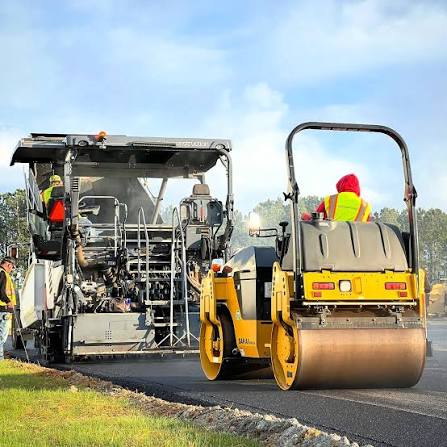
The second mistake lives in the machine class itself. Plate compactors, rammers, and rollers are not interchangeable, and a yard stocks all three for a reason. A plate compactor covers wide, shallow lifts of granular base quickly and evenly. A rammer, the jumping jack, drives its force into a small foot. That foot reaches deep into cohesive soil and tight trench backfill where a plate never gets. A ride-on roller belongs on the asphalt mat itself. Reach for the plate because it is the familiar tool and you will short the deep compaction that a clay driveway edge actually demands.
A two-crew sub near Mesquite learned this the slow way. They ran a plate over a clay-heavy driveway prep, passed a quick visual check, and caught a callback when the edge settled and cracked that spring. Settled subgrade does not lie, and the second trip cost more than a rammer rental ever would have.
Questions That Prevent the Wrong Rental
A good rental yard would rather ask a few questions than send back the wrong machine. That matters more when every input is getting pricier, and right now it is. Construction input prices climbed at a 12.6 percent annualized rate through February 2026, with natural gas alone jumping 10.9 percent in that single month. When a second mobilization eats fuel, labor, and a fresh load of base at those numbers, a bad guess gets expensive fast. Walk into the rental conversation with real answers to a handful of specific questions and the machine that comes back is usually the right one.
- What is the soil on this lot, clay or granular base? A good answer changes the machine class, not just the size.
- How deep is the lift you actually need to compact? Anything past six inches usually points to a rammer, not a plate.
- Are you compacting trench backfill or a wide slab base? A good yard names a different machine for each.
- What does the moisture look like on site today? The right answer ties pass count to how wet the soil is running.
- Can I get delivery and pickup inside the window I have? A straight answer includes a time, not a maybe.
Answer those before you reserve anything and the yard does the hard part for you.
The Right Machine First Time Ends Callbacks
The pattern behind nearly every callback in this trade is the same. The wrong machine met the wrong soil and nobody caught it until the slab had already moved. Fixing it is not complicated, but it is deliberate. Read the soil, pick the compactor class that soil demands, and rent it from an equipment rental dallas tx yard that stocks matched SAKAI rollers, plates, and rammers. Not one all-purpose unit that splits the difference on every job. That is most of the difference between a job that closes clean and a job that comes back.
For a two-crew shop the math is brutally simple. One prevented callback pays for a whole season of correctly matched rentals, and it protects the reputation that brings the next referral through the door. Match the machine to the soil the first time. Do that and the driveway stays flat, the client stays quiet, and the crew moves forward to the next job instead of back to the last one.