Calculating the 18-Yard Box and How Goal Area Geometry Dictates Penalty Odds
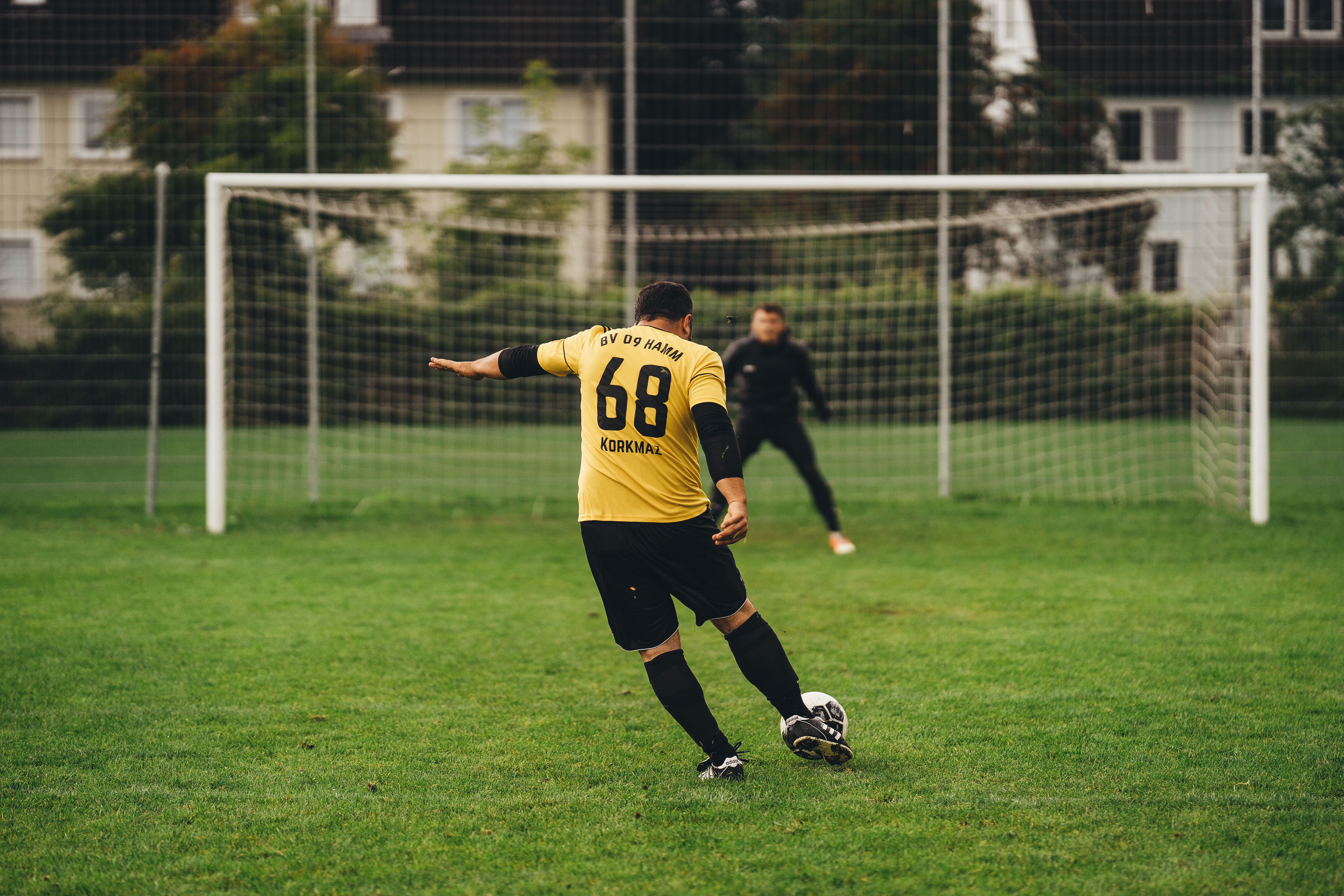
Discover how the dimensions of a football pitch really shape the mathematics behind penalty kicks. A closer look at the geometry of the penalty area reveals why certain positions and angles can influence the probability of scoring and deepen your understanding of the game.
Stand on a football pitch and you’ll quickly notice that every white line serves a purpose. The markings aren’t just there to define the playing area; they create a carefully measured layout that influences some of the game’s biggest moments.
During a penalty, those rectangles, distances and angles all come into play. Looking at the pitch through a mathematical lens offers a fresh way to understand what happens when the pressure is at its highest.
The Anatomy of the 18-Yard Box
The penalty area is a rectangle measuring 44 yards wide and 18 yards deep. Within these clearly defined boundaries, the rules of attacking play change. If a foul is committed inside this space, the referee awards a penalty kick from a spot positioned exactly 12 yards from the center of the goal line.
That penalty spot becomes the starting point for every possible shooting angle toward the goal. The boundary of the box also marks where defenders must remain before the kick is taken. Understanding the dimensions of this area helps explain how space influences both attacking decisions and defensive positioning.
Every part of this marked area can affect player movement, positioning and the match’s momentum.
Analyzing Angular Dimensions for Maximum Value
When you look at the numbers behind successful penalties, the relationship between distance and angle becomes clear. For anyone interested in soccer betting, these geometric details provide another way to analyze how penalties unfold.
The penalty spot sits in the center of the goal, giving the taker the widest possible shooting field.
- The goal measures exactly eight yards between the inside of the posts.
- The penalty spot is positioned 12 yards from the goal line.
- This creates a horizontal shooting angle of roughly 37 degrees.
- The height of the crossbar introduces an additional vertical dimension into the calculation.
Studying these fixed measurements gives you another perspective on how penalties are taken. If you follow soccer betting, watching how players and teams use these angles can add context to your analysis without relying solely on statistics.
Many people interested in the tactical side of the game pay close attention to these consistent geometric relationships when assessing matches.
Distance and the Pythagorean Precision of Penalties
Although the penalty spot is 12 yards from the goal line, not every shot travels the same distance. A strike aimed into the top corner covers a longer path than one directed low through the middle.
Using basic three-dimensional Pythagorean geometry, that longer route measures roughly 13.5 yards through the air.
The extra distance gives the goalkeeper slightly more time to react. By comparison, a lower effort traveling closer to the center reaches the goal more quickly, although it may be easier for a stationary goalkeeper to stop.
If your sports betting analysis includes predicting events during a match, understanding these small differences in ball travel can provide another layer of context when evaluating penalties. Every shot still follows the same geometric principles dictated by the pitch’s dimensions.
Goalkeeper Position and Spatial Distortions
The goalkeeper is the only moving part of this geometric equation. By stepping slightly forward before the kick, the keeper can reduce the visible target available to the penalty taker. Even a movement of only a few inches changes the shooter’s viewing angle and slightly narrows the available space inside the goal.
This is one reason why enforcement of the goal-line rule matters. When officials ensure goalkeepers remain on the line until the ball is struck, the original geometry of the penalty is preserved, allowing the taker to retain the intended shooting angles.
For those analyzing areas such as sports betting, maintaining these fixed conditions helps keep the mathematical assumptions behind penalty situations consistent.
Leveraging Geometric Trends for Strategic Success
A great deal of football strategy revolves around creating opportunities in the penalty area. In particular, many attacking plays involve making diagonal passes to increase the likelihood of forcing an error by the defending team in the penalty area.
The ability to recognize such patterns brings an additional dimension into your watching of the game. The connection between geometry and soccer betting illustrates how measuring the pitch can be a valuable tool when combined with form, tactics and player statistics.
You will understand which teams consistently create overloads in certain parts of the field or take advantage of gaps left by defenders, leading to higher-quality opportunities in such games, especially in the penalty area.
Including a geometric approach in your analysis of sporting events can provide you with a new understanding of certain aspects of the game. The attacking plays on the football pitch should be viewed not only as individual occurrences but as combined movements that create chances for a goal.