How One St Paul Bungalow Bath Went From Cramped To Done
The upstairs bathroom in a 1920s St Paul bungalow had reached the end of its life. The tile behind the tub was loose, the vanity had swelled at its base, and one small sink served a family of four. They wanted it redone, but they dreaded the part nobody advertises. Losing your only working bathroom for weeks while the budget quietly climbs is its own kind of fear. That single worry keeps a lot of older-home baths ugly for years. It resolves faster than owners expect once the right bathroom contractors st paul mn put the job on a mapped, phased schedule. What follows is one such remodel, about $18,000 and one cramped room, with an honest look at where the weeks and dollars went.
The Bathroom That Stopped Working For A Family
Step into the room as it was and the dread makes sense. It measured barely five feet by eight, the original footprint, with a cast-iron tub under a sloped ceiling. Mornings turned into a line out the door. The case we see most often is a homeowner who has put this off for a decade. They simply cannot picture living through the disruption. So the first real job was not tile or plumbing. It was handing them a plan they could hold, phase by phase, with a date on every stage.
Mapping The Job Week By Week
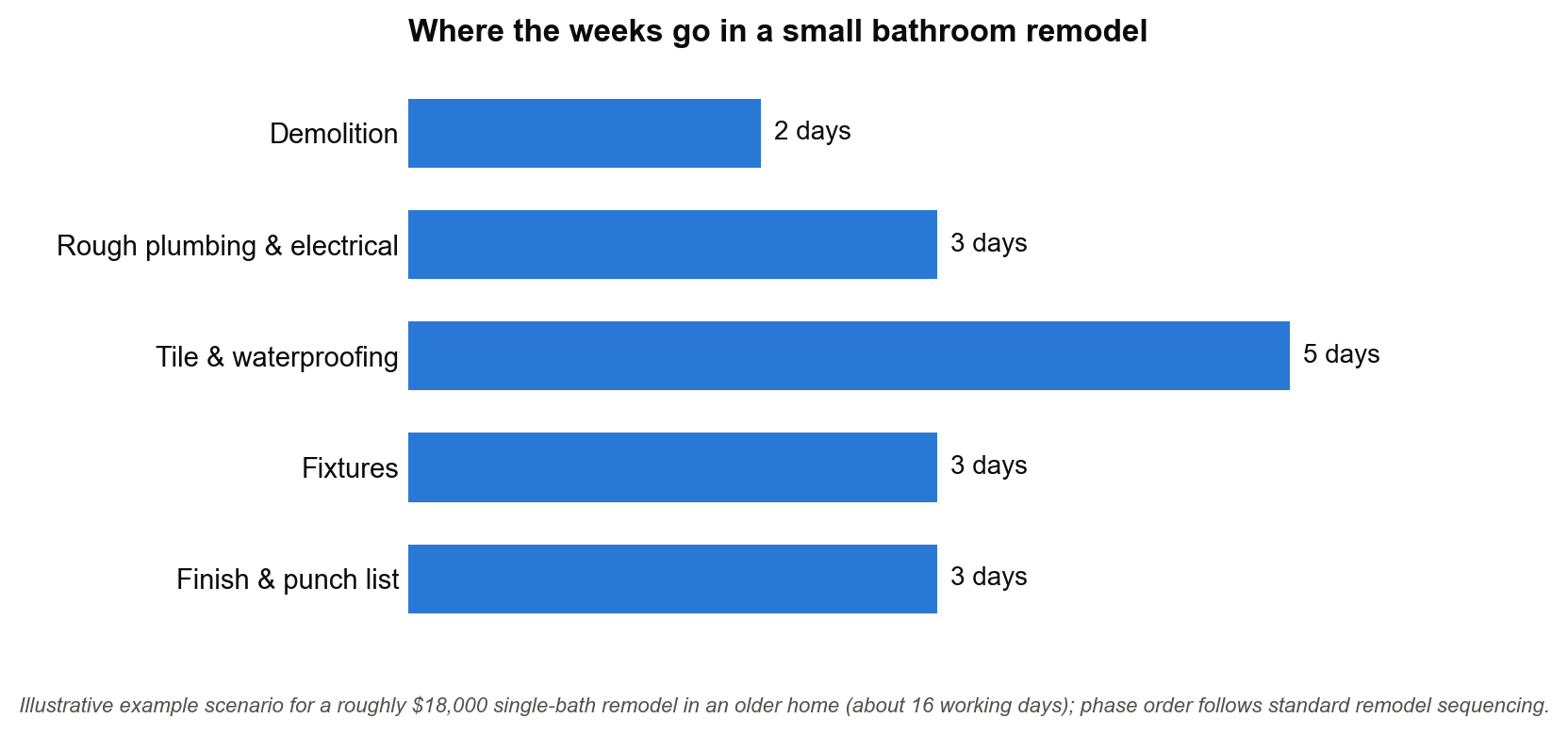
This is the stage where seasoned bathroom contractors st paul mn homeowners hire show what a real plan is for. Here is how the schedule actually unfolded. The first week was demolition and rough work. Two days went to pulling the old tub, tile, and vanity. Then the plumber and electrician spent three days opening walls and updating forty-year-old copper and cloth wiring. That is also when the surprise showed up. Behind the tub surround sat a patch of black mold, the kind that decides your weekend.
The US EPA says a homeowner can clean mold themselves only under about 10 square feet, roughly a 3 foot by 3 foot patch. Anything larger belongs in the hands of a professional. This patch sat right at that line, so the crew contained and remediated it properly instead of gambling on a wipe-down. The second week moved into tile and waterproofing, five careful days. A shower pan that leaks in year two undoes everything above it. Fixtures went in over the next three days, and by day sixteen the punch list was done.
Where The Budget Bent And Held
Budget is where these projects live or die, so this one is worth slowing down on. The plan started at roughly $18,000, and it bent in two places and held everywhere else. The mold remediation added about $600 nobody had penciled in. A midway tile upgrade, from builder-grade ceramic to a porcelain that mimics the home’s era, added another $900. Against that, keeping the plumbing stack right where it sat saved far more than either overage cost. That is the quiet advantage of working inside the original footprint instead of moving walls.
Context helps put the number in perspective. A national spending study reported by Money put the typical minor bathroom remodel at $3,435. That is the light refresh that swaps fixtures and paint without touching the bones. This bungalow needed far more, and pricing a full remodel against that low bar is how owners talk themselves into disappointment. Material costs are not imaginary right now either. The National Association of Home Builders noted in July 2026 that 74% of remodelers had seen supplier price hikes since March, averaging about 6.7%. Its Remodeling Market Index still held at a positive 61, so demand is steady even as prices climb. The smart move is to plan for the real number and protect it, not chase the cheapest quote and get surprised.
A landlord two blocks over learned that the hard way. He insisted on saving an old cast-iron tub. Rerouting the plumbing around its odd drain cost more than a new tub and a clean rough-in would have. The pattern repeats on job after job. The cheap-looking choice is often the expensive one once labor gets counted. A good contractor tells you that before demo starts, not after.
What Made The Finish Worth The Wait
Sixteen working days after the first swing of the hammer, the family had a bathroom that fit the house. The porcelain read as original, and the new vanity gave two people room at once. The tub finally sat under proper lighting after decades in the dark. None of that is what they mention first, though.
What they talk about is the calendar.
They always knew which stage they were in and what it would cost, which is exactly the reassurance a family living through a remodel wants most and almost never gets from a crew working without a plan. A remodel run on a mapped, phased schedule turns the scariest part, the not knowing, into something ordinary. The wait felt short. That predictability is the real deliverable.