Small Brake Noises City Commuters Ignore Until Stopping Distance Grows
A small brake noise is not a personality quirk your car picks up with age. It is the cheapest warning you will ever get, and it is trying to save you money. Ignore it and the repair only grows. For a Milwaukee stop-and-go commuter, the honest cost of brake repair milwaukee wi climbs fast once a faint squeal turns into a soft pedal and stopping distance you can actually feel in city traffic. Here is the plain version, before the excuses start. Drivers who wait almost always pay more than drivers who fix things early, sometimes several times more.
Ignored Brake Noise Is The First Mistake
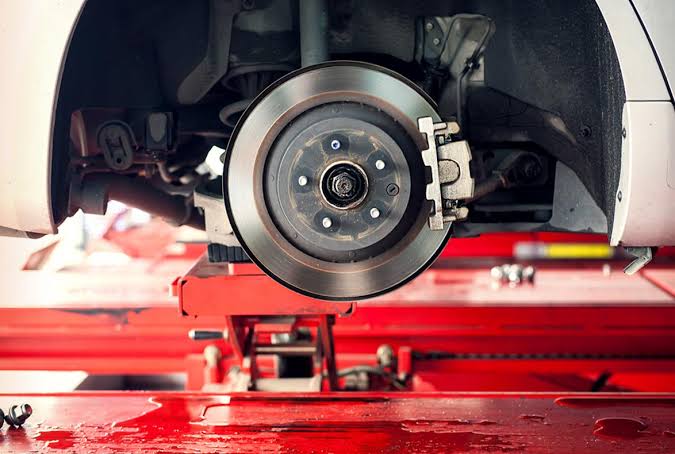
A squeal is not random. It is engineering doing its job. Most modern pads carry a small metal wear indicator that starts to squeal when the friction material gets thin, which is the manufacturer telling you, months in advance, that the clock is running. The job we see most often is a commuter who heard that squeal all winter and decided it was just the cold. By spring the noise had changed. Then it grinds. A grind means the metal backing plate is now chewing into the rotor, and that is the difference between a simple pad set and a pad set plus two rotors. Those pads were on borrowed time, and the rotors went with them.
A Soft Pedal Rarely Fixes Itself
A pedal that sinks toward the floor is a different kind of warning, and a worse one. It usually means air in the lines, moisture in the fluid, or pads worn so far that the caliper pistons are reaching the end of their travel. None of those conditions improve on their own. A pedal that felt slightly soft in November will feel genuinely alarming by the time the roads are wet and every light is a hard stop with a car behind you. When your foot has to guess how much brake it is going to get, you have already waited too long, and that guess gets expensive the day it guesses wrong.
Cheap Pads Cost More Over Time
The cheapest pads on the shelf are a poor bargain, and skimping is the mistake that quietly funds your next visit. Bargain pads often use softer or noisier friction compounds that wear faster and glaze the rotors under constant stop-and-go heat. You save maybe forty dollars today and buy a rotor job in eighteen months. And do not assume newer cars are immune to brake trouble. In May 2026, Hyundai issued a recall covering 421,078 new vehicles over a forward-collision software fault that could brake the car prematurely, which is proof that braking systems fail on showroom-fresh cars, not just high-mileage ones. If you want to know whether your own vehicle sits under an open recall, the free VIN lookup at NHTSA.gov answers it in about a minute. A proper brake repair milwaukee wi shop checks for that too before quoting you anything.
Skipping Fluid Flushes Ruins Good Calipers
Brake fluid is the part nobody thinks about, which is exactly why it causes expensive surprises. It absorbs moisture over time, and that water lowers its boiling point and corrodes the caliper and steel lines from the inside out. A caliper that seizes because the fluid was never flushed will drag a pad against the rotor constantly, overheating both and sometimes pulling the car to one side every time you brake. A fluid flush is a modest, scheduled service. Replacing a caliper you ruined by skipping that flush is neither modest nor scheduled. Neglect here is slow, invisible, and completely avoidable, which is the frustrating part.
DIY Brake Jobs Miss Hidden Damage
Watching a fifteen-minute video does not turn a pad swap into a safe brake job. A weekend installer can bolt on new pads and still miss a glazed rotor, a sticking caliper slide, or a brake hose that has started to balloon with age. Budget maybe two hundred dollars for parts and call the job done. Honestly, closer to four hundred once a seized caliper turns up, and that seized caliper is the part a driveway job almost never catches until the pull shows up on the highway. Hidden brake damage is what turns a small job into a big one. A real inspection is not about upselling. It is about finding the four-hundred-dollar problem while it is still a one-hundred-dollar problem.
Early Attention Keeps Braking Cheap And Safe
The math on brakes is not complicated. Catch a worn pad early and you replace a pad. Wait, and you replace pads, rotors, maybe a caliper, and you spend the winter braking longer distances on icy Milwaukee streets. The same logic runs through the rest of the car, which is why boring routine upkeep quietly pays for itself. The U.S. Department of Energy notes that simply keeping tires properly inflated improves fuel economy by about 0.6% on average, and up to 3% in the best cases, a small habit with a measurable return. Brakes follow the same rule, except the stakes are your stopping distance, not a few dollars at the pump. Deal with the little noises now and braking stays cheap, quiet, and safe.